

TRYGONS DRONES builds two field-tested unmanned surface vehicles, RF49D and ER69D the only two platforms that have actually been built and tested. Every other hull in the catalogue below is custom-build-on-request capability, not a deployed vehicle.
TRYGONS DRONES develops a family of rapidly deployable, configurable unmanned maritime platforms designed for real sea operations.
Our approach is not to build one fixed-purpose drone boat and force every customer to use the same propulsion, communications, sensors or mission software. We provide the proven maritime platform, autonomy, power, communications and integration architecture, then configure the final system around the customer's mission and logistics environment.
RF49D and ER69D are the first operational examples of this common architecture. They are not the limits of the platform family.
A DRONE COMPANY WITH A BOATBUILDER'S UNDERSTANDING OF THE SEA
TRYGONS DRONES is an R&D, engineering, integration and manufacturing company focused on unmanned maritime systems and related autonomous technologies.
The company's maritime platforms are built on decades of experience in lightweight composite structures, advanced product development and industrial manufacturing. The underlying hull family has been developed through years of civilian use, autopilot operation and repeated testing in the Aegean Sea.
This matters because a USV is not simply a remote-control system fitted to a boat. Hull behaviour, steering response, weight distribution, propulsion, electrical power, communications, autonomy and mission payloads must work together as one system. TRYGONS DRONES develops the complete platform with this integration problem in mind from the beginning.
Build a platform that can enter the customer's operational system — without forcing the customer to enter a closed TRYGONS DRONES ecosystem.
ONE ARCHITECTURE — MULTIPLE PLATFORM SIZES
TRYGONS DRONES develops a family of unmanned maritime platforms around common design principles, interfaces and support philosophy. RF49D and ER69D address different parts of the mission spectrum while sharing core control, communications, integration and maintenance concepts.

RF49D
Compact tactical USV designed for rapid deployment, low logistics burden and modular mission integration.
- Length
- Approx. 4.86 m
- Beam
- Approx. 1.63 m
- Max payload
- Up to 500 kg

ER69D
Extended-range multi-role USV with large mission volume, energy capacity and integrated UAV capability.
- Length
- Approx. 6.9 m
- Beam
- Approx. 2.26 m
- Max payload
- Up to 1000 kg
PRODUCTION & INDUSTRIAL SCALE
FIELD TRIALS
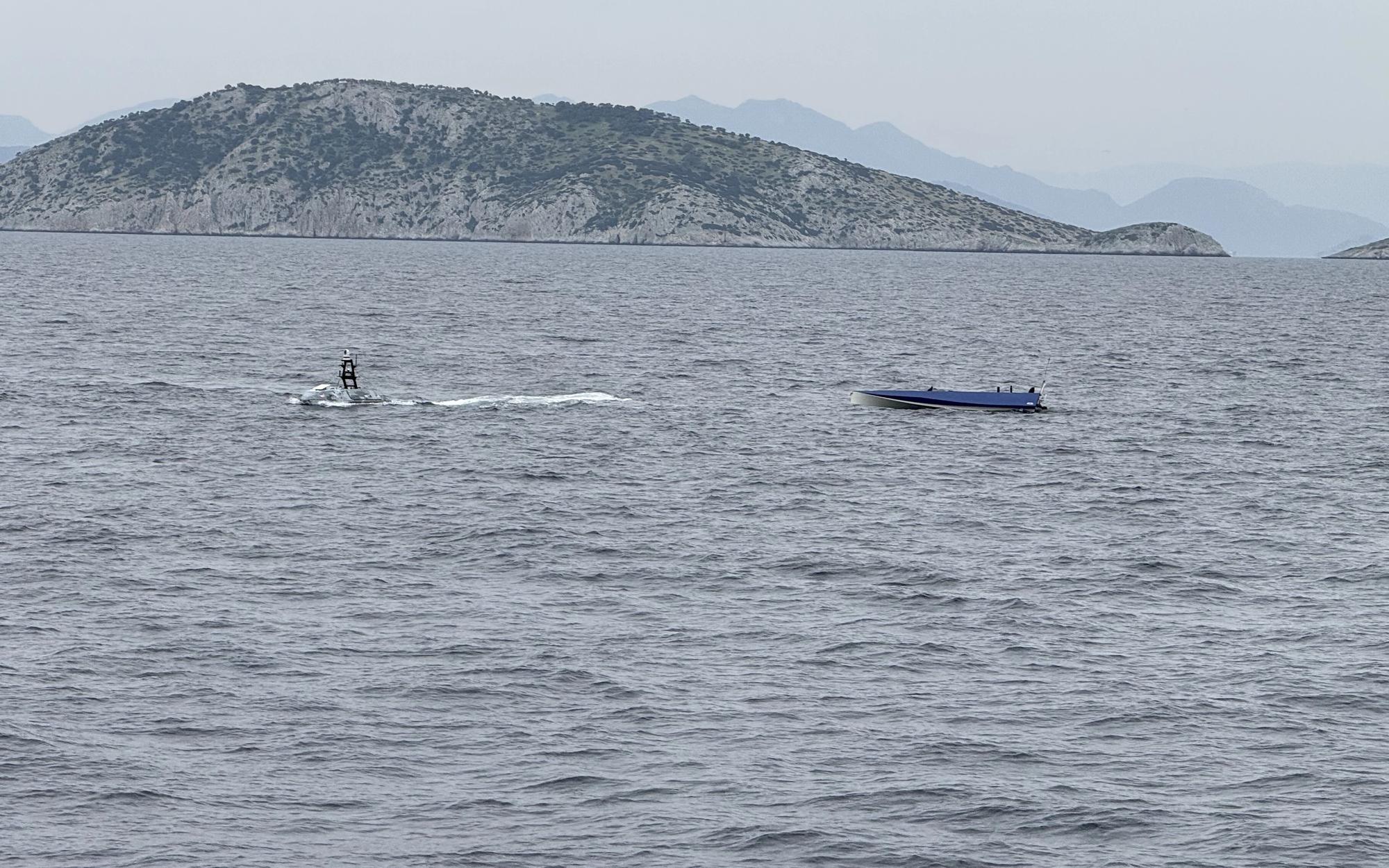
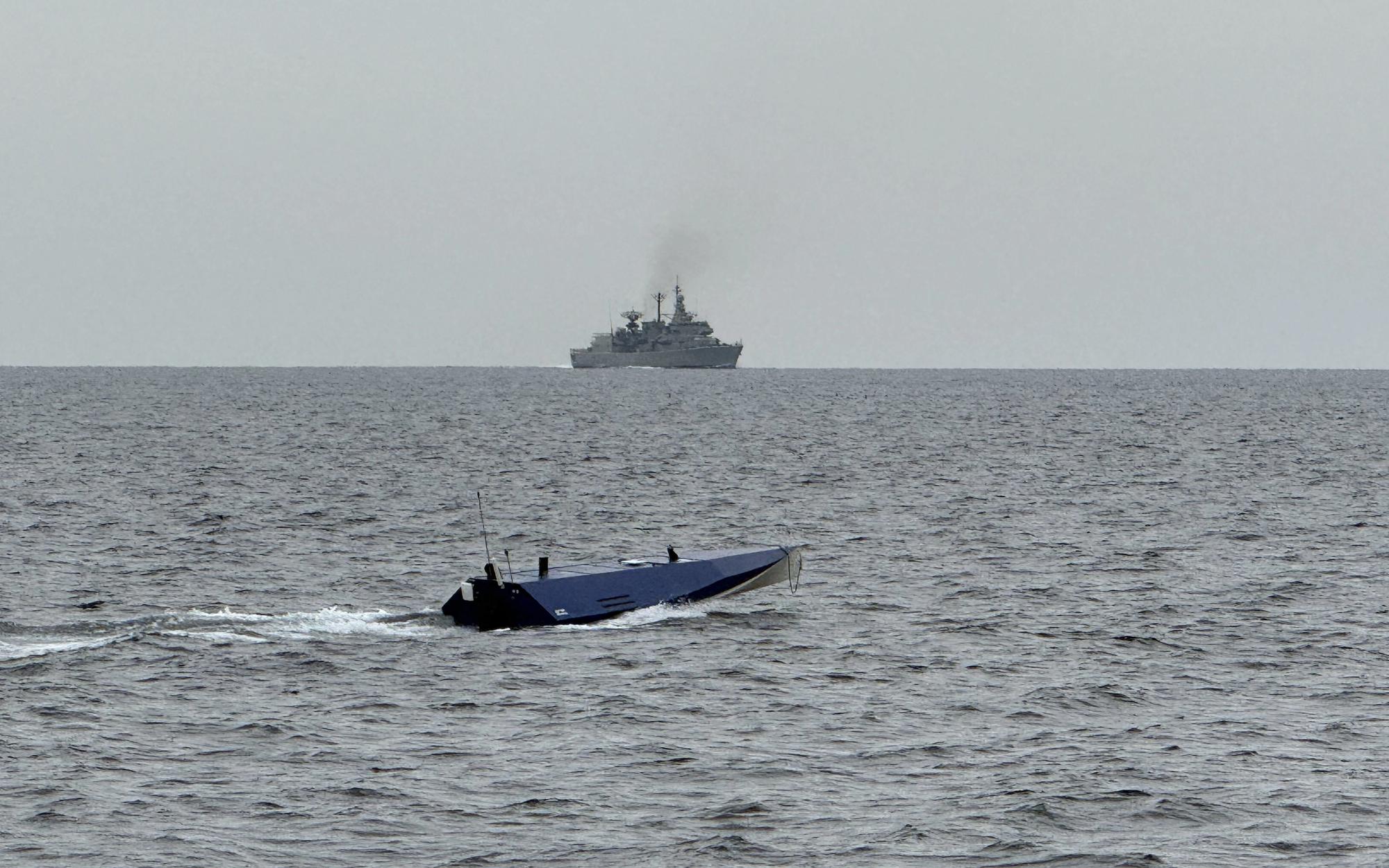
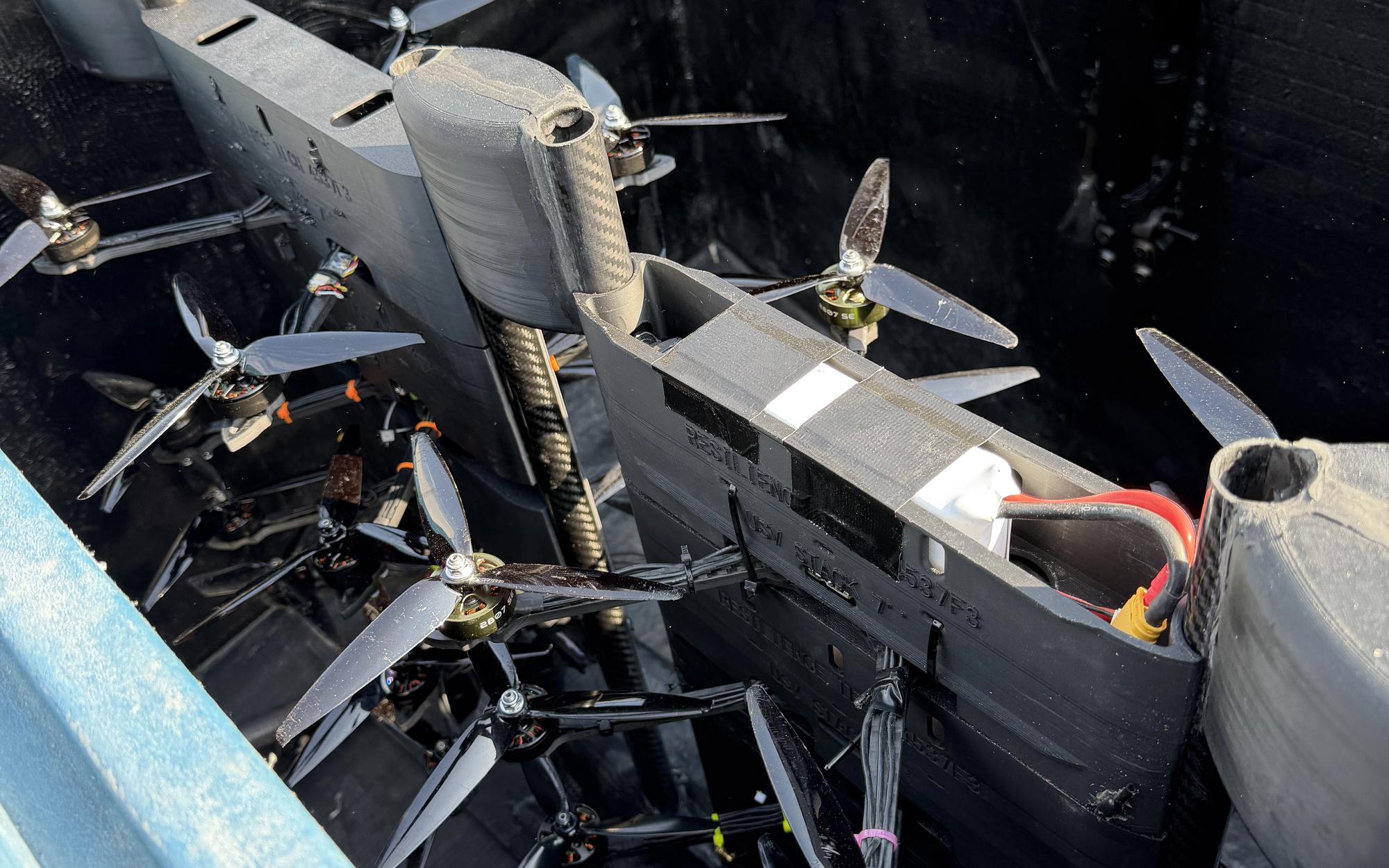
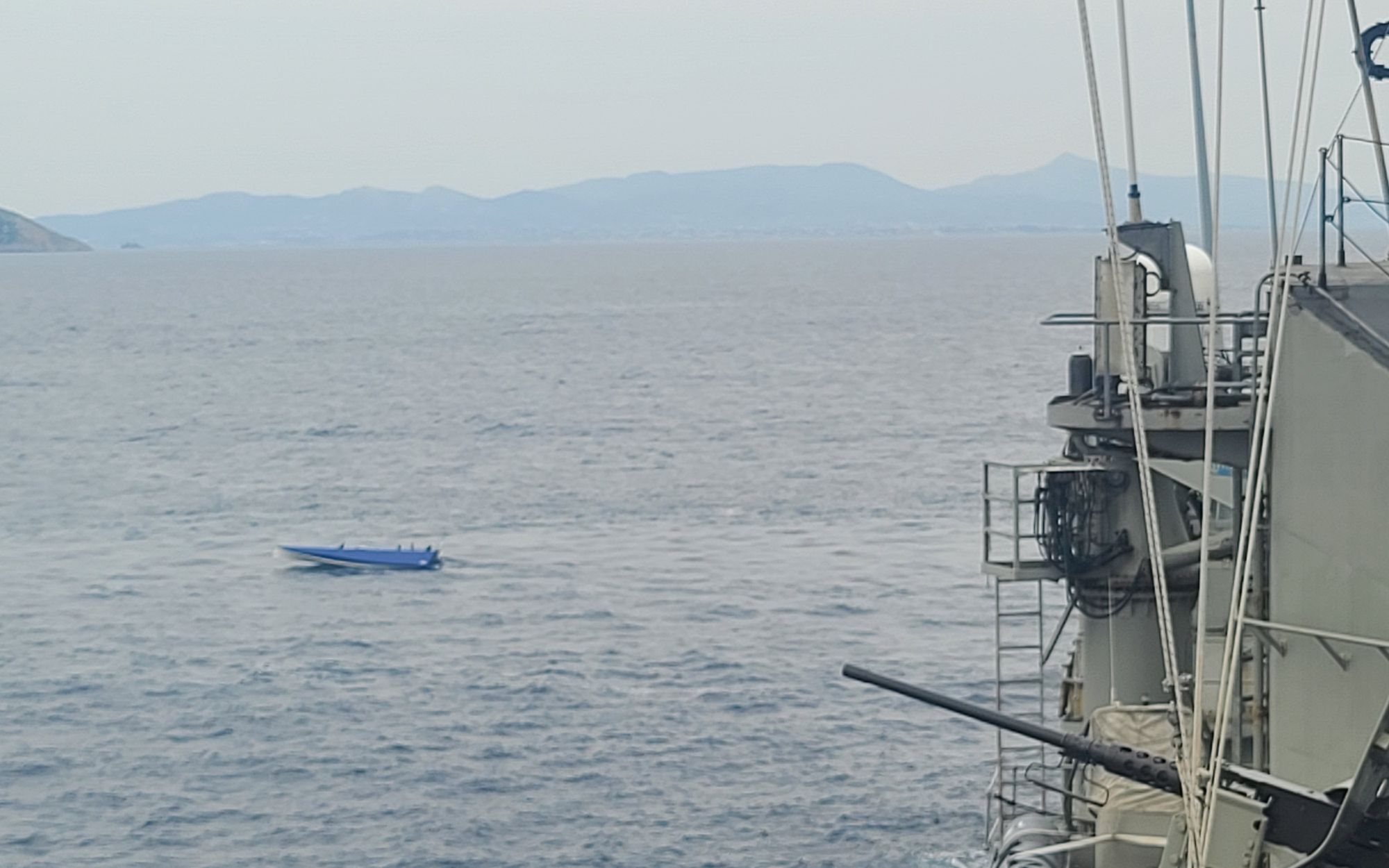
THE HULL PROVIDES THE PLATFORM. THE MODULE DEFINES THE MISSION.
TRYGONS DRONES platforms are designed around rectangular, serviceable mission spaces rather than permanent single-purpose installations. A mission bay can be configured for fuel today, communications tomorrow and a customer-developed sensor package later.
The common interface can provide 12 V and 24 V DC, optional 230 V AC, Ethernet, CAN bus, USB where required, discrete control and safety I/O, relay outputs and optional water cooling. High-power or safety-critical equipment may require dedicated engineering — standardisation provides the starting point, it does not replace proper integration.
- Define the mission
- Select the technology
- Integrate mechanical, power and data
- Test the complete system
- Validate at sea
- Freeze the customer production configuration
TRYGONS DRONES aims to make the USV the integration platform — not the technology bottleneck.
DESIGNED TO ENTER THE CUSTOMER'S NETWORK
TRYGONS DRONES does not require a customer to build operations around a proprietary manufacturer-only C2 environment.
RF49D and ER69D share a common control and data philosophy. Vessel position, heading, speed, health and mission information can be exported to external systems, and raw sensor feeds can be made available independently from the TRYGONS DRONES operator interface. Third-party software can interface with the underlying autonomous vehicle architecture through standard vehicle-control interfaces.
For fleet programmes, TRYGONS DRONES can integrate customer-selected tactical radios, SATCOM, VPN and firewall policies, ground stations, mission software, sensors and approved gateways to wider tactical networks, and can provide documented interfaces and Interface Control Documentation for approved integrations without requiring unrestricted release of proprietary source code. NATO tactical-network interfaces such as Link 16 or Link 22 are not claimed as native capabilities — where required, they can be integrated through the customer's approved gateway or specialist partner.
TRYGONS DRONES should fit into the customer's operational network — the customer should not have to fit into ours.
MULTIPLE PATHS — ONE OPERATIONAL PICTURE
A maritime drone should not depend on one communications technology. TRYGONS DRONES platforms can combine tactical RF, 4G/5G, satellite communications, broadband satellite connectivity and customer-selected military communications.
Existing integrations and trials include Hellas Sat satellite connectivity, dual cellular connectivity and multi-link operation; Doodle Labs MANET tactical RF is being integrated into the current architecture and remains subject to sea validation. Different links can carry different traffic simultaneously — for example, command on one path and video on another.
The platform supports configurable lost-link behaviour. For safety-oriented exercises, TRYGONS DRONES has used conservative logic in which propulsion is removed when control communications are no longer considered reliable; other customer-approved mission logic can be configured according to operational requirements. The architecture is progressing toward automatic link selection, failover, boat-to-boat relay, distributed MANET operation and multiple operator stations.
The communications system is part of the mission configuration, not a fixed dependency.
PROVEN CONTROL BELOW — REPLACEABLE INTELLIGENCE ABOVE
TRYGONS DRONES separates reliable vessel control from higher-level mission intelligence. The lower layer handles waypoint missions, automatic steering and speed control, return functions, geofencing, hold/loiter, manual takeover, mission repeatability and fail-safe behaviour.
The higher layer can add AI-assisted object detection, classification, coordinate estimation, route optimisation, collision avoidance, sensor fusion and customer-specific mission logic. Current systems have successfully tested AI classification of people, vehicles and boats with confidence outputs, and automatic coordinate estimation of detected objects, with current development accuracy around 20 metres in the tested configuration. Full radar/LiDAR/AIS tactical-map fusion and advanced COLREG-aware autonomous avoidance remain development objectives, not production capabilities today.
Reliable autonomy controls the boat. AI improves what the boat understands.
NAVIGATION DESIGNED FOR DEGRADATION — NOT ONLY PERFECT GPS
Current autonomous waypoint navigation uses GNSS together with onboard inertial and heading sensors. If GNSS information becomes unavailable, heading and manual remote control can remain available so the operator can retain control of the vessel.
The next navigation architecture is being developed around customer-selectable, autopilot-compatible resilient PNT solutions: dual-antenna GNSS heading, higher-grade INS, jamming and spoofing awareness, degraded-GNSS modes, camera/LiDAR-assisted navigation and future radar-assisted navigation. The required PNT grade depends strongly on mission and price, so TRYGONS DRONES prefers a scalable architecture instead of forcing the cost of a high-end navigation system onto every training or low-cost platform.
MOVE THE SENSOR — NOT JUST THE MAST
Small USVs have a physical limitation: sensor horizon. TRYGONS DRONES does not believe the only solution is to make every small platform taller, heavier and more expensive.
RF49D therefore favours compact EO/thermal and AI-assisted sensing where possible, protecting the advantages of a low centre of gravity and low physical profile. ER69D can carry larger radar, EO/IR and power-intensive ISR equipment when required. Current integration experience includes EO, thermal imaging, LiDAR, AI cameras, independent raw video feeds, recorded sensor data linked with vessel position and time, and external transmission to third-party systems. UAVs provide the next layer: an airborne sensor is not limited by the USV mast horizon.
PAYLOAD CAPACITY IS NOT ONLY MEASURED IN KILOGRAMS
A USV may physically carry radar, AI, SATCOM or UAV equipment and still fail as a mission platform if it cannot power and cool that equipment for the required duration. TRYGONS DRONES therefore treats mission energy as part of platform design.
A large third-party mission-power system from Pleione Energy has already been integrated during military-exercise development; depending on configuration and load, stored onboard energy can support high-demand mission electronics for approximately one to two days. The architecture can provide 12 V DC, 24 V DC, 230 V AC, high-current distribution, dedicated battery systems and mission-system cooling. For extended high-energy missions, larger batteries, dedicated generators, solar charging or hybrid architectures can be integrated — generator and solar-based charging solutions have been developed extensively through civilian maritime use. TRYGONS DRONES has also tested electric propulsion on the RF49 platform with a 25 hp-class electric outboard; electric propulsion is treated as a mission option, not a universal answer.
LOW PROFILE BY SIZE, WEIGHT AND EQUIPMENT PLACEMENT
TRYGONS DRONES does not describe RF49D or ER69D as "stealth" vessels without formal signature measurement. Instead, low signature is approached through platform architecture: low physical profile, lightweight composite construction, compact sensor installation, minimal topside equipment, retractable-mast capability in selected configurations, inboard underwater-exhaust options, electric-operation options and customer-selectable signature-management solutions.
RF49D has an approximate above-water platform height of around 0.6 m in its basic low-profile configuration. Operational observations have shown that a small, low-profile platform can be difficult to distinguish from normal small maritime returns at distance; formal radar-cross-section and thermal-characterisation testing is planned before any quantified signature claims are made.
Low signature starts with the vessel architecture. It should not depend only on an expensive coating added at the end.
NOT DEVELOPED FOR FLAT-WATER DEMONSTRATIONS
The EcoRunner/RedFin hull lineage has been developed through years of operation in the Aegean Sea. TRYGONS DRONES uses difficult sea conditions as a development tool, because autonomy becomes valuable only when the boat can continue to steer, communicate and execute its mission as conditions deteriorate.
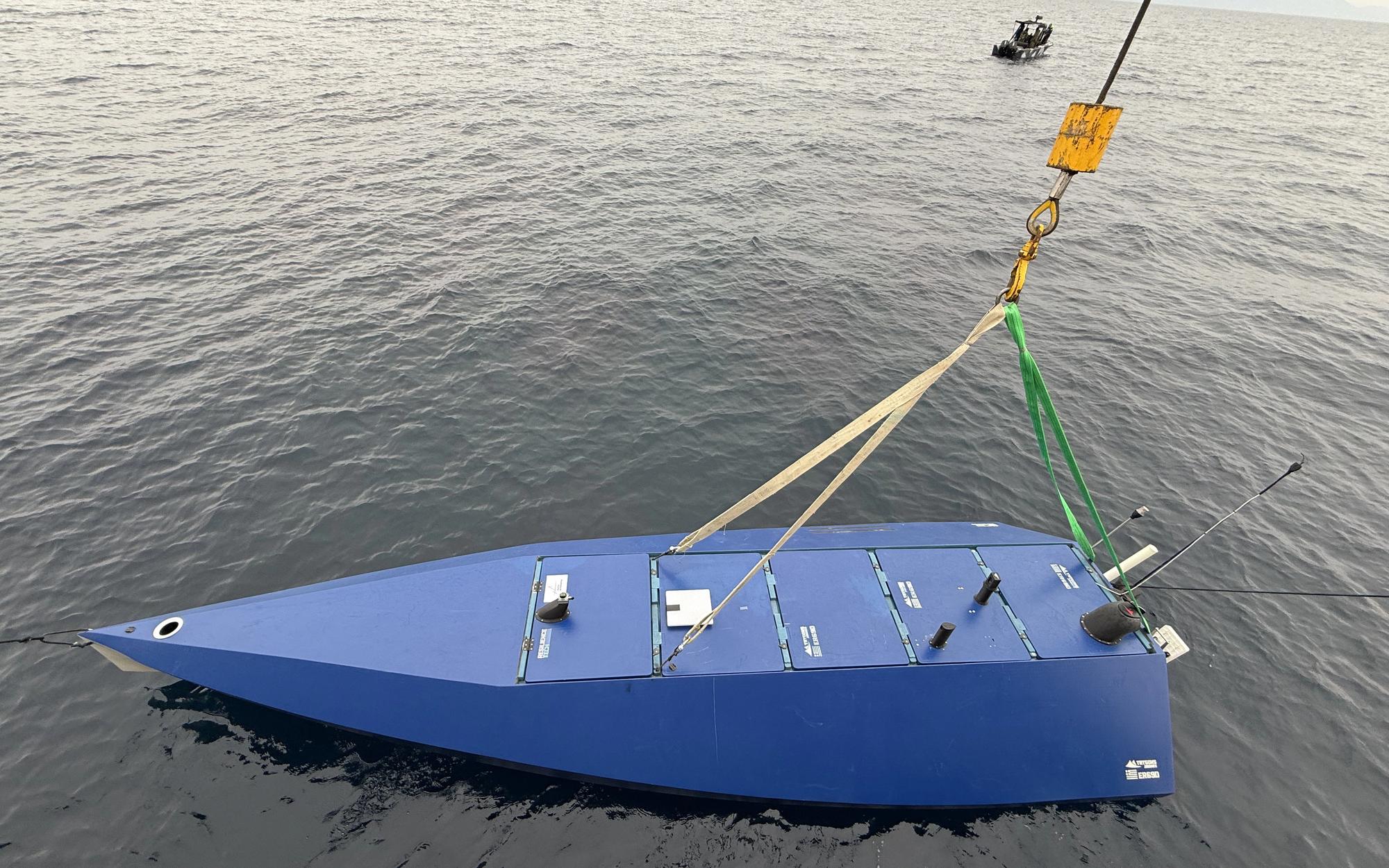
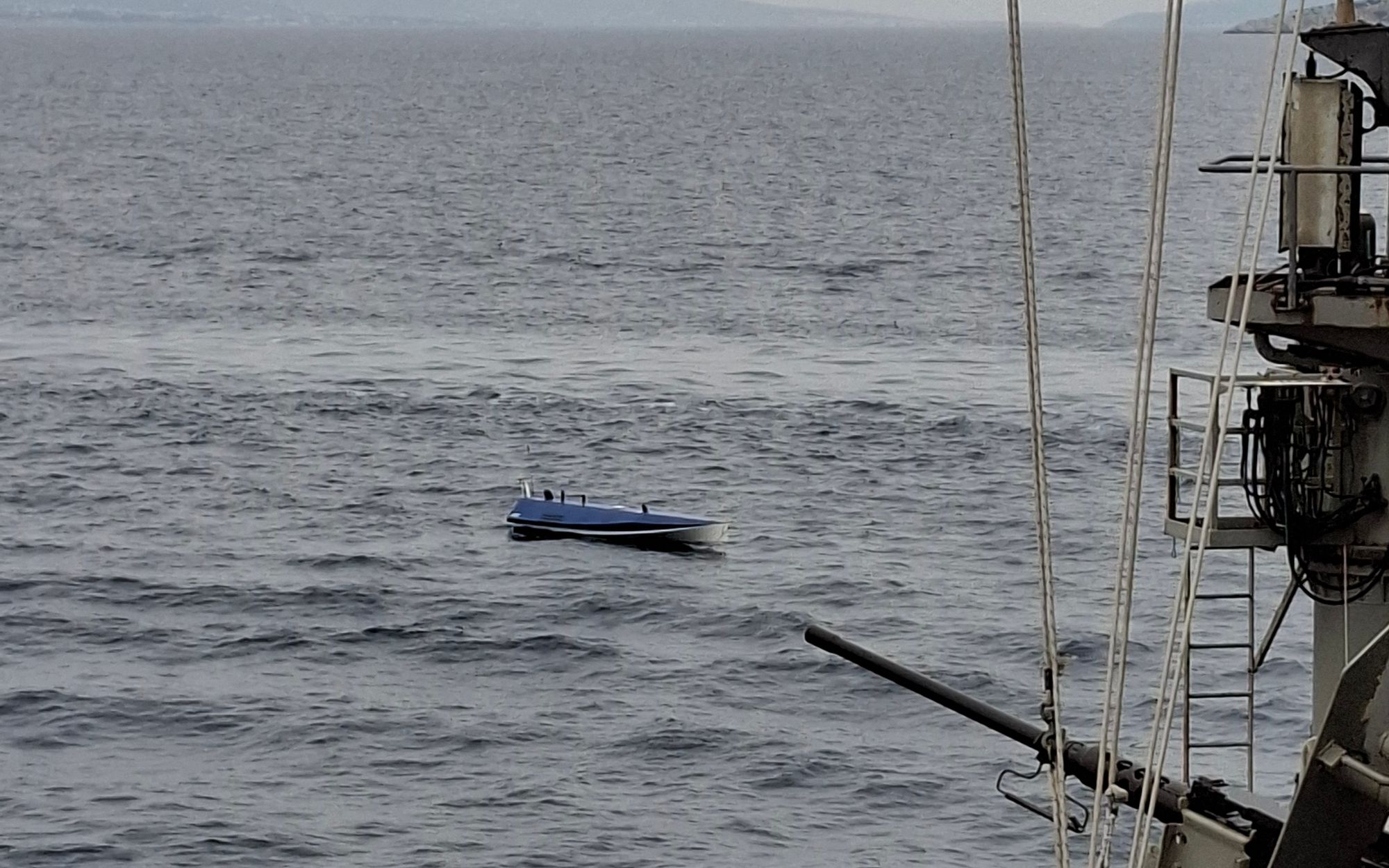
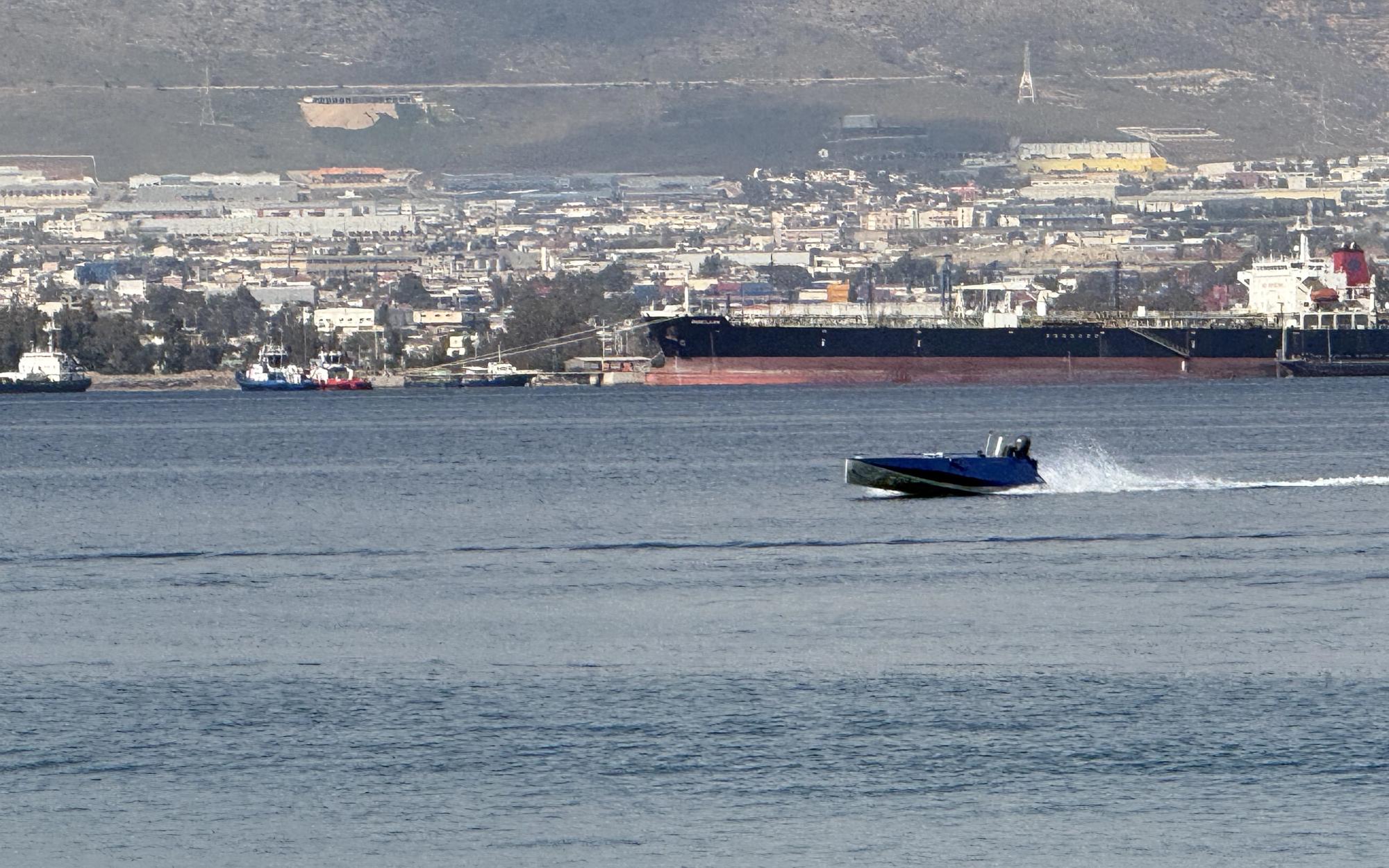
RF49D has operated in approximately Beaufort 5 conditions, reaching speeds up to about 25 knots during testing. ER69D has operated in approximately Beaufort 6 conditions and has reached substantially higher peak speeds during limit testing — such speeds are not presented as normal recommended operation. The objective throughout is predictable course keeping, reduced slamming, stable autopilot behaviour, secure payload installation, rapid deck drainage, robust communications and safe recovery.
A maritime drone must be tested where the sea is difficult — because that is where the difference between a demonstration and an operational platform becomes visible.
DESIGNED TO BE REPAIRED DURING A CRISIS
TRYGONS DRONES deliberately avoids unnecessary dependence on unique mechanical components. Where practical, the platforms use common commercial marine engines, standard electrical interfaces, standard PWM/CAN control concepts, plug-replaceable control components, shared actuators and electronics, common connectors and locally obtainable support parts.
RF49D and ER69D can share approximately 90% of relevant spare components when configured with the same control and communications architecture — batteries and propulsion may differ. During exercise support, TRYGONS DRONES has repaired a platform by transferring working components from another vessel when required, demonstrating the value of common, plug-replaceable parts. For meaningful fleet programmes, the final configuration can be designed around the customer's existing engines, mechanics, communications, batteries, voltages, spare-part system and sovereignty requirements.
The final USV should adapt to the customer's logistics system — not force the customer's logistics system to adapt to the USV.
NO NAVAL BASE REQUIRED FOR EVERY MISSION
RF49D and ER69D are designed to move through normal national logistics. A USV does not always need to carry all operational reach in its fuel tank if it can be transported rapidly by road and launched closer to the mission area — for an island geography such as Greece, platforms can be pre-positioned with fuel, basic tools, spare actuators, batteries, communications equipment and a small local support team.
- RF49D typical road-ready weight around 600 kg
- ER69D typical road-ready weight around 900 kg
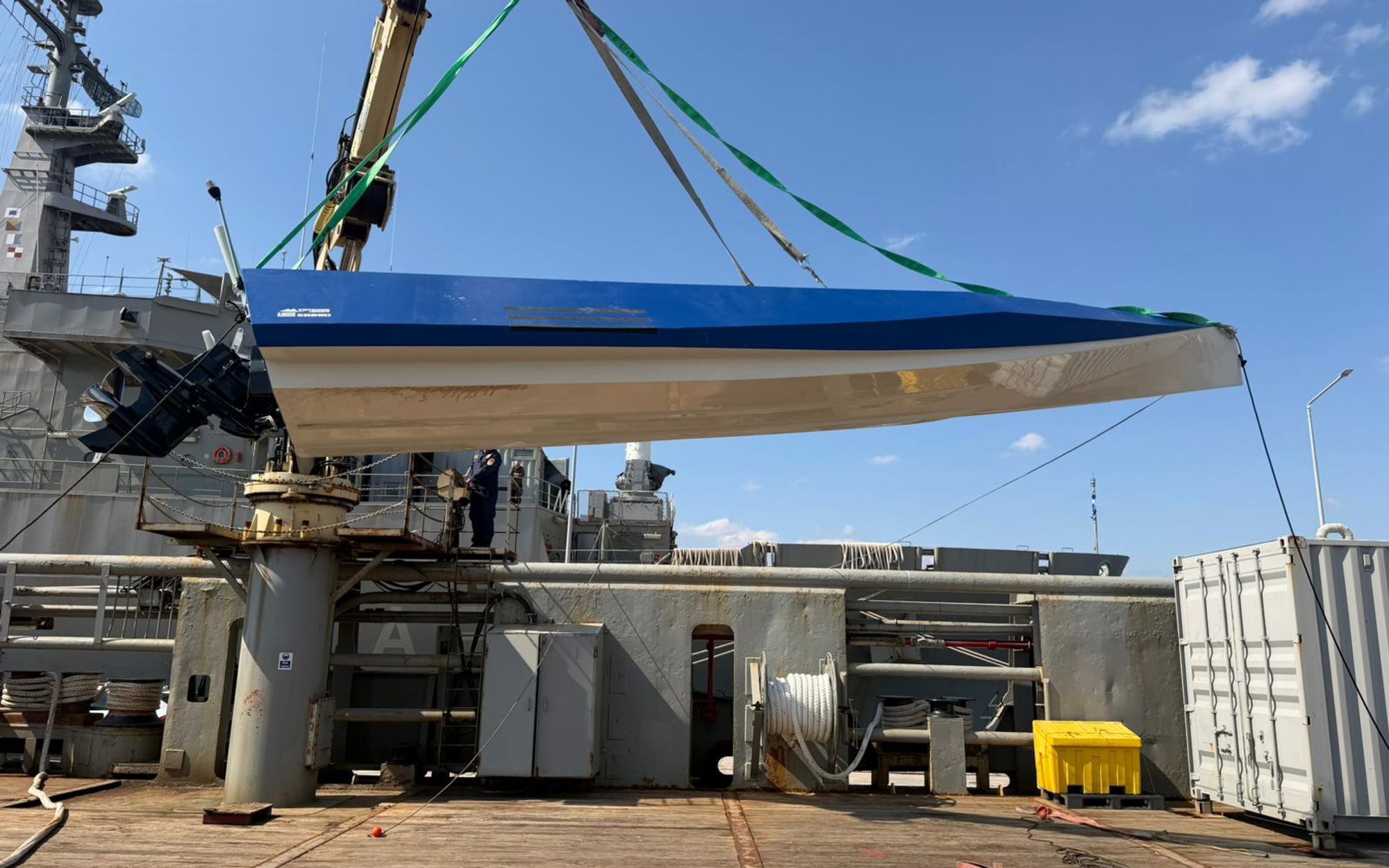
- Both can be trailered and include lifting points
- Ship-crane deployment has been performed
- RF49D fits easily into a 20 ft container; multiple units on one truck
- Two ER69D-class platforms can be arranged for 40 ft container transport
The launch point itself becomes part of the mission plan.
SECURE WITHOUT BECOMING CLOSED
TRYGONS DRONES treats cybersecurity as part of vessel architecture. Current configurations support vessel-specific credentials, encrypted and authenticated communications, authenticated remote C2, role-based operator permissions, encrypted mission-computer storage, VPN-based remote connectivity, controlled software updates, known-good rollback and separation between internet-facing communications, mission sensors and core vessel-control functions. Deliberate security and access testing has been performed during development.
For production fleets, the customer can define its own encryption keys, VPN, firewall policies, operator roles, communications-security rules and customer-controlled crypto architecture. Detailed network topology, security methods and cryptographic implementation are not published on the public website.
The customer defines the security environment. TRYGONS DRONES ensures that the USV can operate safely inside it.
FAIL-SAFE BY DEFAULT
A lost link, failed computer or uncertain control state should not turn an unmanned vessel into an uncontrolled vessel. TRYGONS DRONES safety architecture can include independent hardware emergency stop, remote engine shutdown through more than one path, propulsion shutdown after critical autopilot failure, configurable lost-link behaviour, geofencing, engine and battery monitoring, bilge/flooding monitoring, multiple bilge pumps with independent power, steering/throttle position feedback and black-box event logging.
The steering system can compare commanded and actual position, enabling failure detection and automated responses such as throttle reduction or propulsion shutdown if selected by the customer. The correct safety logic is mission dependent — training, civilian testing and military operations may intentionally use different lost-link behaviour.
Safety is not one emergency-stop button. It is a hierarchy of defined responses to failure.
OPERATORS SHOULD NOT HAVE TO LEARN ON THE MOST EXPENSIVE BOAT IN THE FLEET
RF49D can be delivered as a simplified training platform without expensive mission sensors, advanced SATCOM or other high-value modules. The training configuration retains most of the same vessel-control architecture, autopilot logic, operator workflow, mission-planning concepts and emergency procedures.
Experienced boat operators can understand basic control quickly, but TRYGONS DRONES recommends a minimum five-day initial course to build proper operational discipline. Training can cover operator/pilot duties, mission planning, first-line maintenance, communications loss, GNSS loss, low-energy conditions, engine faults, C2 faults, geofence events, emergency shutdown and recovery, with black-box mission data available for replay during debriefing. For larger fleets, TRYGONS DRONES can provide a dedicated training USV and training C2 station while operational vessels remain deployed, initially operating alongside customer crews and progressively transferring responsibility.
The goal is customer independence — not permanent dependence on TRYGONS DRONES operators.
Production & industrial scale
OPERATIONAL FIRST — INDUSTRIAL SCALE NEXT
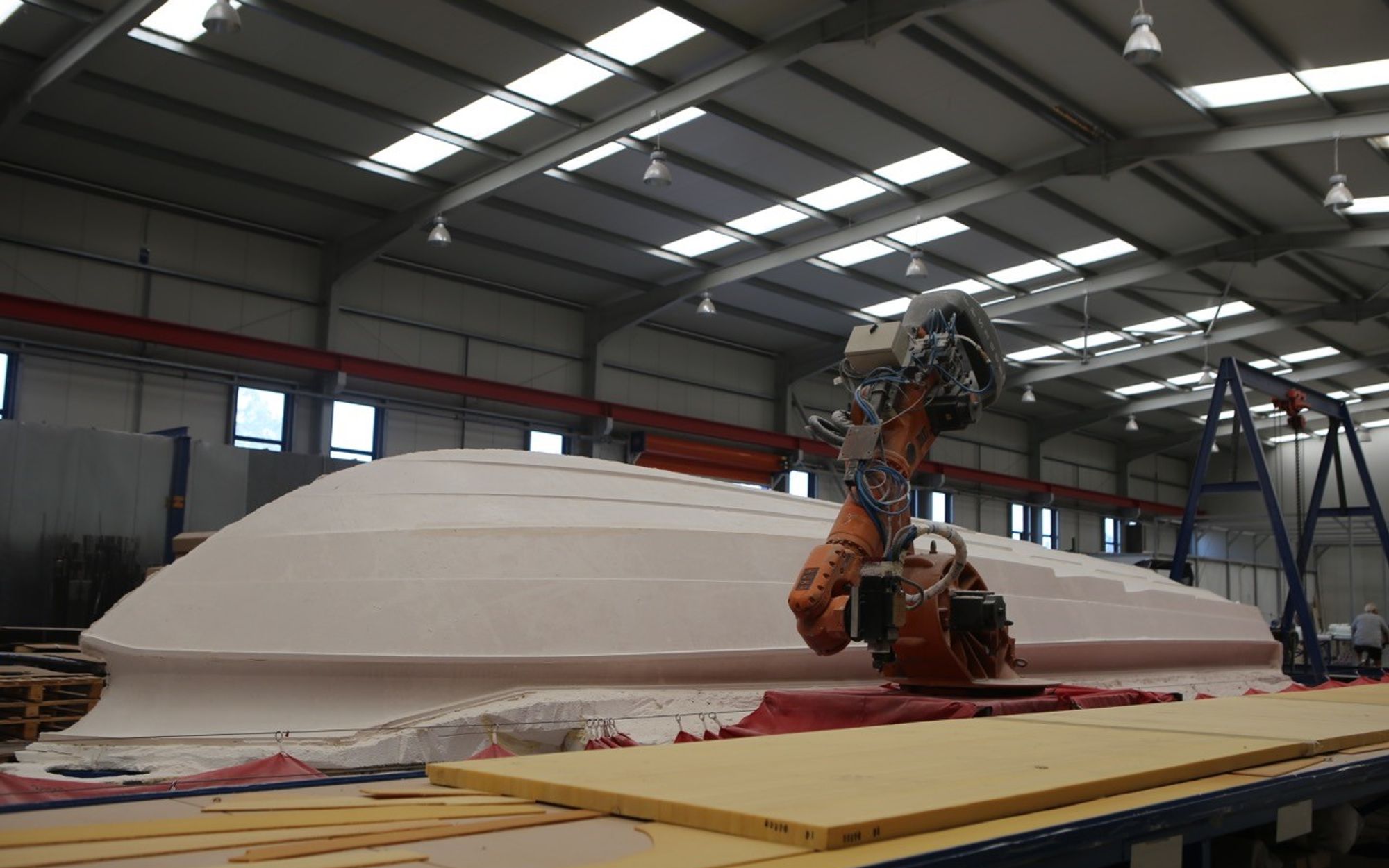
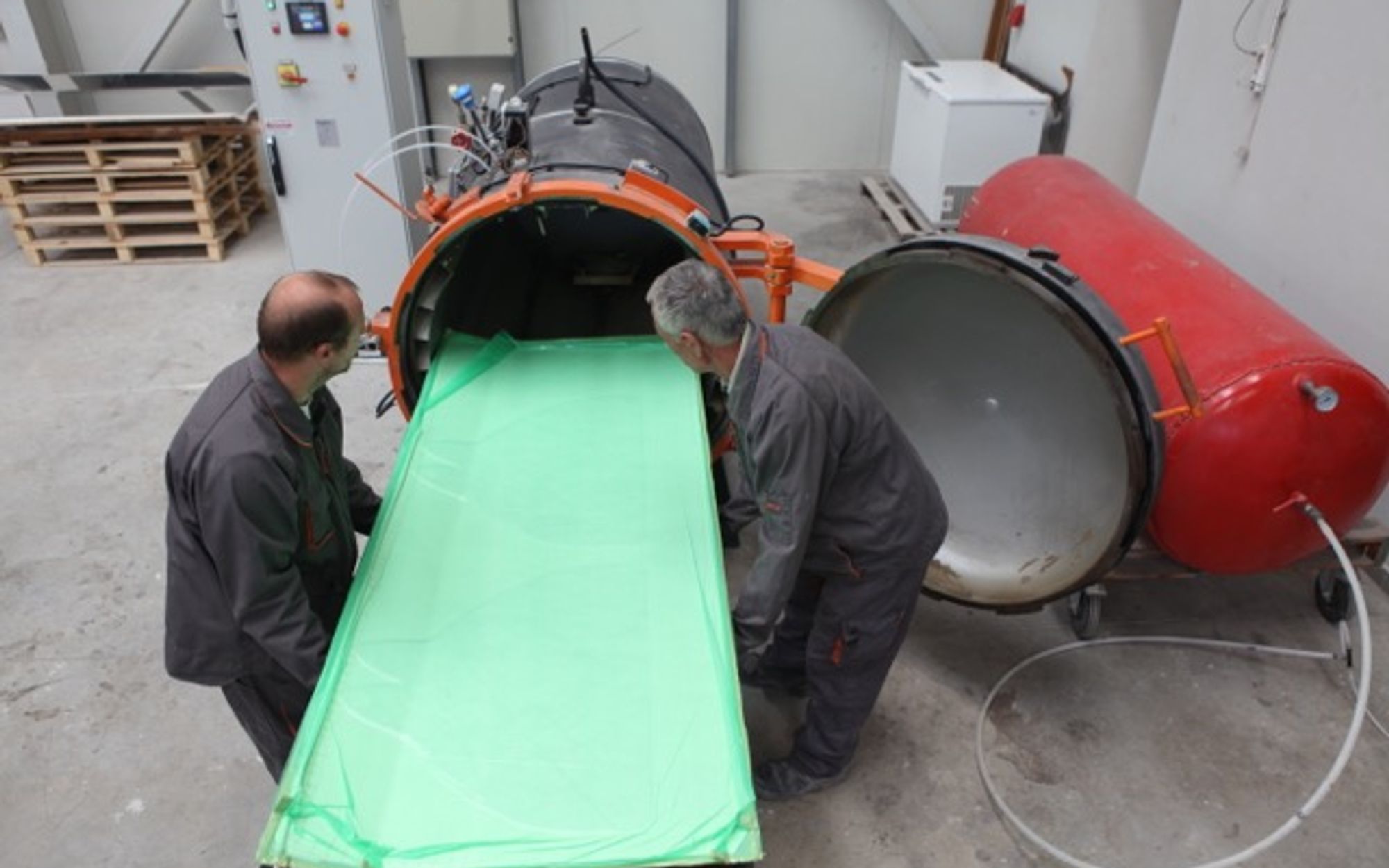
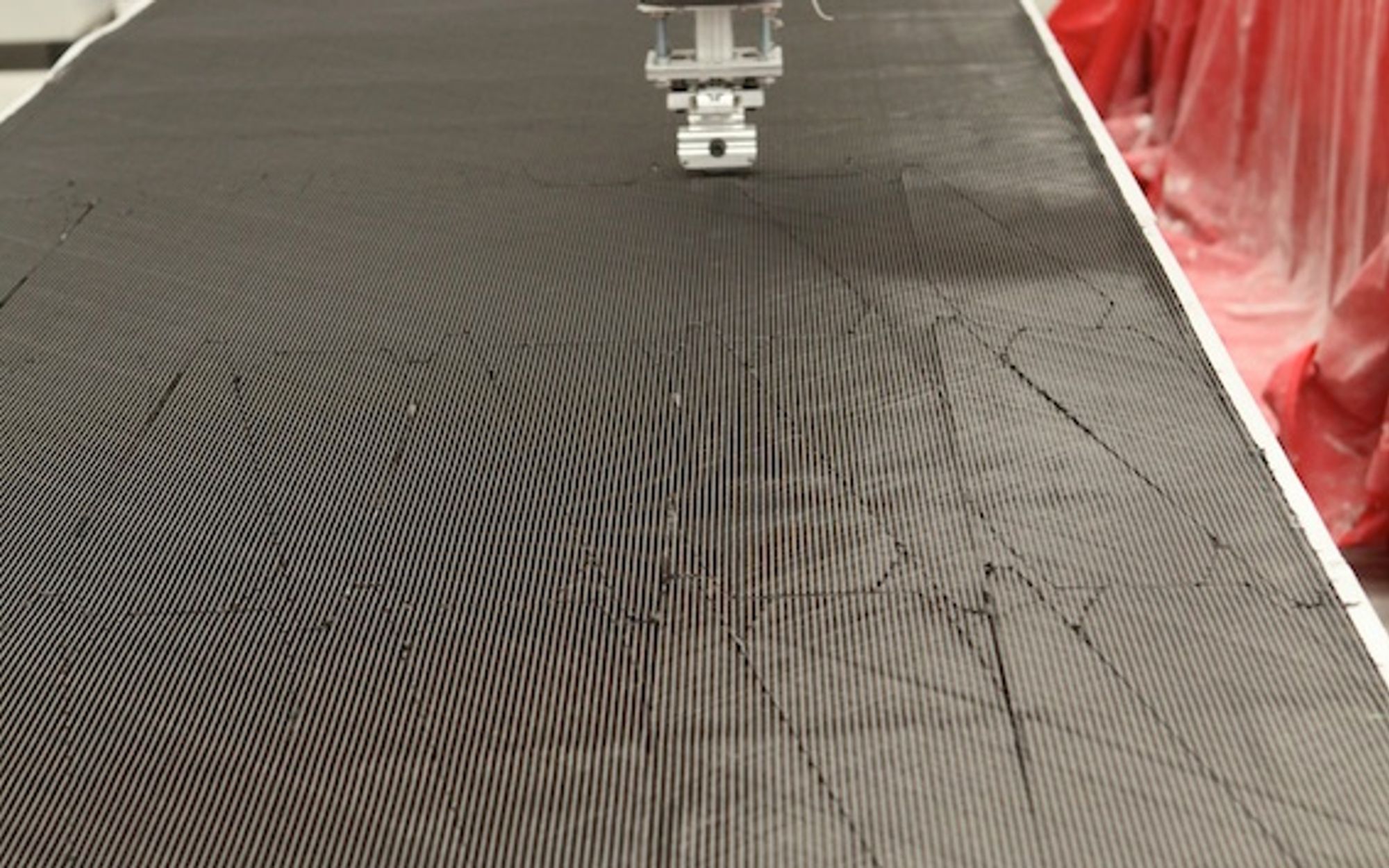
TRYGONS DRONES is built around product development that leads to physical manufacture and field testing. The industrial background includes advanced composite manufacturing, large monocoque resin-infusion structures and production methods developed for repeatability rather than prototype-only construction.
Current factory capability is estimated at approximately 20 RF49D/ER69D-class platforms per month without major new industrial investment, subject to configuration and supplier availability. With a dedicated military production ramp and secured supply chain, TRYGONS DRONES estimates approximately 50 platforms per month is achievable after around six months of ramp-up — the primary scaling constraint is expected to be imported electronics and subsystem availability rather than composite hull manufacturing. Fleet planning includes second-source strategy, strategic component inventory, controlled BOM revisions, standardized wiring, software configuration control, repeatable final test and customer-witnessed acceptance where required. Military production can run in parallel with civilian manufacturing.
The question is not whether one prototype can be built. The question is how quickly a validated configuration can become a fleet.
CONTROL THE EVOLUTION — DO NOT FREEZE IT
An unmanned platform must evolve without becoming an uncontrolled collection of different prototypes. TRYGONS DRONES production programmes are structured around serialized vessels, controlled wiring revisions, controlled software and firmware releases, BOM revision management, documented factory acceptance testing, sea acceptance testing, customer-witnessed acceptance where required, full as-built configuration records, maintenance history and controlled upgrades.
A standard waypoint mission and a complete functional sea run are considered core delivery acceptance activities. The documentation set for serial military delivery is being formalized around operator manuals, maintenance manuals, wiring diagrams, spare-parts catalogues, software configuration, Interface Control Documentation, troubleshooting procedures and training material, and can be supplied in Greek and English, adapted to customer-specific military formats.
The objective is not to freeze the technology. It is to control its evolution.
TEST TO FIND THE WEAKNESS — NOT TO HIDE IT
TRYGONS DRONES uses development testing to deliberately discover where structures, systems and procedures fail. The wider hull family has been exposed to years of Aegean civilian operation, autopilot use, rough-weather testing, deliberate load changes, structural-damage testing, long-term materials development, propulsion changes, field repairs and communications/electrical failures.
A RedFin49-family test vessel was deliberately operated after extensive below-waterline penetration testing and remained afloat and capable of planing, demonstrating reserve buoyancy and damage tolerance of the underlying lightweight hull concept. Military prototypes are tracked separately from civilian heritage — current dedicated RF49D and ER69D military-prototype logs are still relatively young and are being expanded through structured testing. The civilian fleet is not presented as military-USV operating hours; it is the long-term hydrodynamic and mechanical foundation on which the dedicated unmanned systems are being built.
Before asking a computer to drive the boat, we spent years developing a boat that a computer could drive well.
NO SINGLE COMPANY SHOULD TRY TO BUILD EVERY TECHNOLOGY INSIDE A MODERN USV
A modern unmanned maritime platform can require expertise in naval architecture, propulsion, autonomy, communications, satellite systems, AI, EO/IR, LiDAR, radar, batteries, UAVs, cybersecurity and mission software. TRYGONS DRONES does not believe one supplier must invent all of these technologies.
Our role is to understand the operational requirement, select the appropriate technologies, integrate them mechanically and digitally, test the complete system at sea and finalize the production configuration together with the customer. Exercise and development integrations have included independent Greek and international technologies for thermal imaging, satellite communications, energy storage, LiDAR, weather routing and UAV systems. The supplier can change. The platform architecture remains.
BUILT FOR OPERATIONAL VALUE — NOT THE LOWEST PURCHASE PRICE
TRYGONS DRONES does not design its USVs simply to be the cheapest platforms in their category. The objective is to deliver systems that can be fielded rapidly, maintained locally, adapted continuously and returned to service quickly while remaining economically realistic to deploy in meaningful numbers.
A tactical fleet does not need every expensive module installed on every hull. Sensors, advanced communications, AI computers, UAV systems and other high-value mission equipment can be allocated where needed and transferred between compatible platforms — separating hull quantity from mission-system quantity. A training boat can remain inexpensive while a smaller number of advanced mission modules are assigned to operational platforms. Pricing must sustain ongoing autonomy and C2 development, integration engineering, demonstrations, testing, documentation, training, support, spares, configuration control and future platform development.
TRYGONS DRONES does not aim to build the cheapest USV. We aim to build a USV that can be fielded fast, maintained locally, adapted continuously and replaced at operational speed.
WHY TRYGONS DRONES
01 — Real maritime heritage
The unmanned platforms are built on hull families developed through years of real Aegean operation.
02 — Open integration
Customer-selected communications, sensors, propulsion and C2 can be integrated instead of forcing permanent vendor lock.
03 — Low logistics burden
Lightweight platforms can be moved by road, trailer, container and ordinary ship cranes.
04 — Repair by substitution
Common, plug-replaceable components and commercial marine systems simplify field maintenance.
05 — Modular mission value
High-value equipment can be shared and moved instead of permanently installed on every hull.
06 — Distributed ISR
Compact onboard sensing can be combined with UAVs and external systems rather than relying on a large permanent mast.
07 — Industrial scale
Composite manufacturing and repeatable production methods are designed for fleet ramp-up.
08 — Customer sovereignty
The final communications, cybersecurity, C2 and support architecture can be configured around the customer.
09 — Continuous development
New sensors, AI and communications can be added without replacing the underlying fleet.
10 — Tested in the Aegean
Development takes place in the environment the platforms are intended to survive.
CLEAR ABOUT WHAT IS PROVEN
Proven / already demonstrated
- Autonomous waypoint navigation
- Remote operation and manual takeover
- Return functions and geofencing
- EO / thermal integration
- LiDAR integration
- AI object classification in development trials
- Automatic detected-object coordinate estimation in development trials
- Satellite and cellular communications
- Multiple simultaneous communications paths
- Independent sensor feeds
- Large mission-energy integration
- Modular UAV cassette and multiple UAV launches
- Third-party system integration
- Ship-crane deployment
- Rapid trailer launch
- High representative payload testing
- Rough-sea operation
- Black-box logging
- Controlled software rollback
- Role-based C2 access
- Field component substitution
In active development / qualification
- Doodle Labs MANET sea validation
- Dual-USV operation from a common control environment
- Boat-to-boat communications relay
- Higher-grade resilient INS / dual-antenna PNT
- Autonomous collision avoidance / COLREG functions
- Radar and AIS integration
- Combined tactical-map sensor fusion
- Improved AI target-coordinate accuracy
- Formal RCS / IR signature measurement
- Formal EMC / EMI qualification
- Environmental qualification
- Expanded fleet reliability statistics
TRYGONS DRONES deliberately distinguishes demonstrated capability, customer-selectable integration and development targets. This allows customers to evaluate the platform on evidence rather than promises.
FROM AUTOPILOT BOATS TO AN UNMANNED MARITIME PLATFORM FAMILY
- 2012–2013 The EcoRunner hull development moves toward long-range efficiency and autopilot-controlled operation in the Aegean.
- 2013 EcoRunner59 completes a 105-nautical-mile efficiency run using 25 litres of petrol, with the journey performed on autopilot.
- 2013–2024 Civilian RedFin and EcoRunner families create a growing real-world operating base — feedback from private owners, professional users and autopilot installations feeds into hull, steering and production development.
- 2024 The lightweight hull architecture expands across a wider size range, creating the basis for compact and larger unmanned variants.
- 2025 ER69D is publicly presented at DEFEA as a Greek-developed modular unmanned maritime platform.
- 2026 — UVEX 1/26 ER69D participates in the Hellenic Navy innovation exercise UVEX 1/26, integrating third-party technologies and UAV capability in operational sea conditions.
- 2026 — Dourios Ippos RF49D participates in Dourios Ippos 2026, completing autonomous routes and an open-sea mission profile while integrating systems from multiple technology partners.
Today. TRYGONS DRONES is developing the next fleet layer: resilient PNT, MANET communications, multi-USV operations, improved AI target localisation, radar/AIS integration, advanced collision avoidance, formal signature measurement and expanded qualification.
BUILD THE CONFIGURATION AROUND THE MISSION
RF49D and ER69D demonstrate the current capabilities of the TRYGONS DRONES platform architecture. For larger programmes, the final vessel does not need to be identical to either prototype.
TRYGONS DRONES can work with the customer to define platform size, propulsion, endurance, mission power, communications, PNT, C2, sensors, payload interfaces, logistics, training, support and local manufacturing strategy.
THE PLATFORM REMAINS. THE TECHNOLOGY EVOLVES.